
Pharma Blog

Forced Degradation Studies During Method Validation
During method validation, the FDA expects forced degradation studies to be conducted to assess the stability-indicating capability of the analytical method. These studies involve subjecting the drug substance or product to various stress conditions (e.g., heat, light (Day and UV light), acid/base hydrolysis, oxidation) to induce degradation. By monitoring changes ... Read More
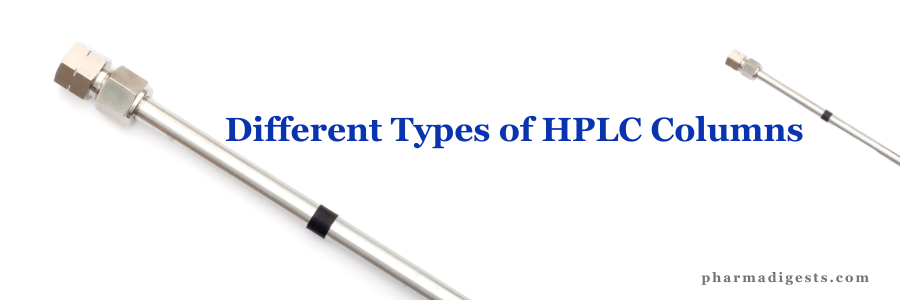
Different Types of HPLC Columns in Pharmaceutical Analysis
In High-Performance Liquid Chromatography (HPLC), the choice of column is crucial for successful separation and analysis. Let’s explore the different types of HPLC columns: Normal Phase HPLC Columns Stationary Phase: These columns have a more polar stationary phase than the mobile phase. Silica gel, a polar material, is commonly used ... Read More

Drug Excipient Compatibility Study During QbD
To perform Drug-Excipient Compatbility (DEC) study 4 types of samples are required to be preprared: All these samples are packed in flint glass vial or amber color vial (if API is light sensitive) with and without sealing & exposed for a particular time period i.e. 1 Day, 3 Days, 7 ... Read More

Basics of Line Clearance in Pharmaceutical Industry
Line clearance is an essential process in the pharmaceutical industry to ensure the safety and quality of products being manufactured. It involves a thorough inspection and verification of equipment, facilities, and materials before starting a new batch production or after completing a batch. The 3 C’s of line clearance, which ... Read More
Hazardous Drugs Handling in Healthcare Settings
USP General Chapter- 800 provides standards for safe handling of hazardous drugs to minimize the risk of exposure to healthcare personnel, patients and the environment. The National Institute for Occupational Safety and Health (NIOSH) considers a drug to be hazardous if it exhibits one or more of the following characteristics ... Read More

Supply Chain Security Risks in Pharmaceutical Industry
Supply chain security refers to the protection of a company’s supply chain from various risks and threats that could disrupt or compromise the flow of goods, information, and services within the supply chain network. Supply Chain Security Includes Physical Security: This involves safeguarding physical assets, such as warehouses, transportation vehicles, and ... Read More

Physiology of the Gastrointestinal Tract
The gastrointestinal tract stretches from the mouth to the anus and consists of our main anatomical areas; the esophagus, the stomach, the small intestine and the large intestine or colon. The wall of the gastrointestinal tract is essentially similar in structure along its length, consisting of our principal histological layers: ... Read More

Physiological Factors Influencing Oral Drug Absorption
The gastrointestinal tract is complex. Figure 1 outlines some of the main structures involved in and key physiological parameters that affect oral drug absorption. In order to gain an insight into the numerous actors that can potentially influence the rate and extent of drug absorption into the systemic circulation, a ... Read More

Qualification of HPLC | A Complete Guide
The HPLC qualification process consists of four parts: Design Qualification (DQ) Design qualification (DQ) describes the user requirements and defines the functional and operational specifications of the instrument. It should ensure that instruments to be purchased have the necessary functions and performance that will enable them be suitable for the ... Read More

Importance of pKa Value in Selection of Dissolution Media
There is a question: How pKa value helps in selection of Dissolution Media during Formulation & Analytical Development? For Dissolution, Ionized form of a drug is required to be solubilized & released passively into dissolution medium. While, For Absorption, only unionized form of drug is important to be absorbed passively ... Read More

Cleanroom Behavior in Pharmaceutical Industry
Cleanroom Behavior is a crucial aspect in preventing contamination in manufacturing areas. Operators must adhere to specific cleanroom behaviors, including the following practices: Slow and Deliberate Movement Operators should move carefully to minimize air turbulence, which can lead to particle generation or shedding. This principle should be observed throughout the ... Read More