
Pharma Digest
Solid Dispersions in Pharmaceutical Formulations
Solid dispersions stand as a cornerstone of modern pharmaceutical formulation, offering innovative solutions to enhance drug solubility, bioavailability, and therapeutic efficacy. Understanding Solid Dispersions: Solid dispersions involve dispersing one or more active pharmaceutical ingredients (APIs) within a solid matrix, typically a polymer or carrier material. This approach addresses challenges associated ... Read More
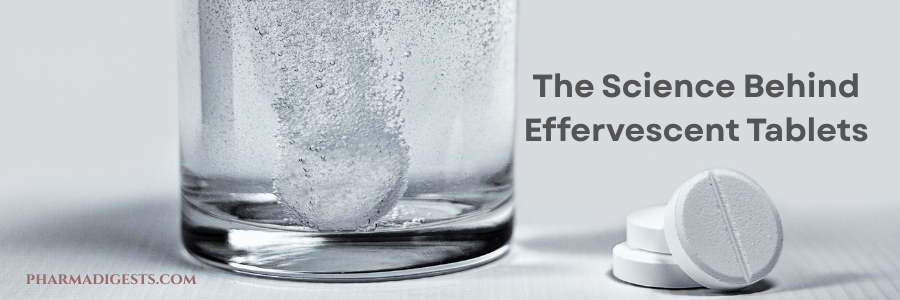
The Science Behind Effervescent Tablets
Ever marveled at the rapid fizz of an effervescent tablet? Behind that effervescence lies a meticulously crafted blend of excipients, each serving a crucial role in the tablet’s formulation. Acidulants: Think citric acid or tartaric acid. These key players react with bicarbonates, like sodium bicarbonate or potassium bicarbonate, triggering the ... Read More

Drug-Device Combination Products | Innovations and Compliance
In the ever-evolving landscape of medical technologies, drug-device combination products represent a cutting-edge integration of drugs, medical devices, and biologics. These products offer innovative solutions for disease management, but they also demand a robust understanding of regulatory frameworks and compliance to ensure safety, efficacy, and quality. What Are Combination Products? ... Read More

QMS in Pharmaceutical Industry
A Quality Management System (QMS) is a formalized framework that outlines the structure, responsibilities, and processes for achieving quality objectives in an organization. The QMS ensures that products or services meet customer and regulatory requirements. Content of a QMS: A typical QMS consists of the following elements: Quality Policy: A ... Read More

Navigating Bioequivalence Study Guidelines Across Global Regulatory Bodies
When conducting bioequivalence (BE) or bioavailability (BA) studies for regulatory approval, guidelines from different regulatory bodies must be adhered to. Here’s a summary of the key considerations and variations across major regulatory agencies Regulatory Guidelines Comparison USFDA Special Cases: Study Design: EMA Acceptance Range: Study Design: WHO Study Design: MHRA ... Read More

Comprehensive List of Pharmaceutical Guidelines
Self Inspection & Batch Review Risk Management Deviation Handling Change Control Out of Specification (OOS) Corrective and Preventive Action (CAPA) Process Validation Cleaning Validation Data Integrity Stability Studies GMP Pharmaceutical Quality System Pharmaceutical Development Good Storage and Distribution Practices (GSDP) Electronic documents and records Read also:

Impurity Specification Across Different Regulatory Bodies
Impurities in pharmaceutical products play a critical role in ensuring drug quality, safety, and efficacy. Regulatory bodies such as the USFDA, EMA, PMDA, and others have specific guidelines for identifying, quantifying, and controlling impurities. Types of Impurities Key Guidelines for Impurity Control USFDA EMA PMDA (Japan) WHO Indian Pharmacopeia Differences ... Read More

Justification for Control of Elemental Impurities in Formulation
Introduction Definition: Elemental impurities are trace levels of metals that can be introduced into drug products from raw materials, manufacturing processes, or container closure systems. Regulatory requirement: ICH Q3D and relevant pharmacopeial guidelines (USP <232>, <233>) specify acceptable limits for elemental impurities to ensure patient safety. Identification of Potential Sources ... Read More

Trend Analysis for Elemental Impurities
Trend analysis for elemental impurities is not explicitly required by guidelines like ICH Q3D . However, certain aspects of stability trends and variability need to be considered to ensure compliance and accurate reporting. Stability Trends for Elemental Impurities In most cases, if no such risk is identified, monitoring for trends ... Read More

Effect of pH in Analytical Method
As a chromatographer not many of us are aware of how critical pH is in your method development, sometimes it is even considered as an inconsequential factor, which could have a negligible effect on our analysis. However, in truth pH can make or break your analysis, choosing the correct or ... Read More

Media and Buffers in Dissolution Method Development
Sink Conditions: Volume of medium should be at least 3 times that needed to form a saturated solution (USP definition). pH Range: Typical range is 1.1 to 6.8, but can be adjusted up to pH 8.0 for solubility. Common Buffers: Surfactants: Medium Deaeration: Ensure medium is deaerated to prevent bubbles, ... Read More